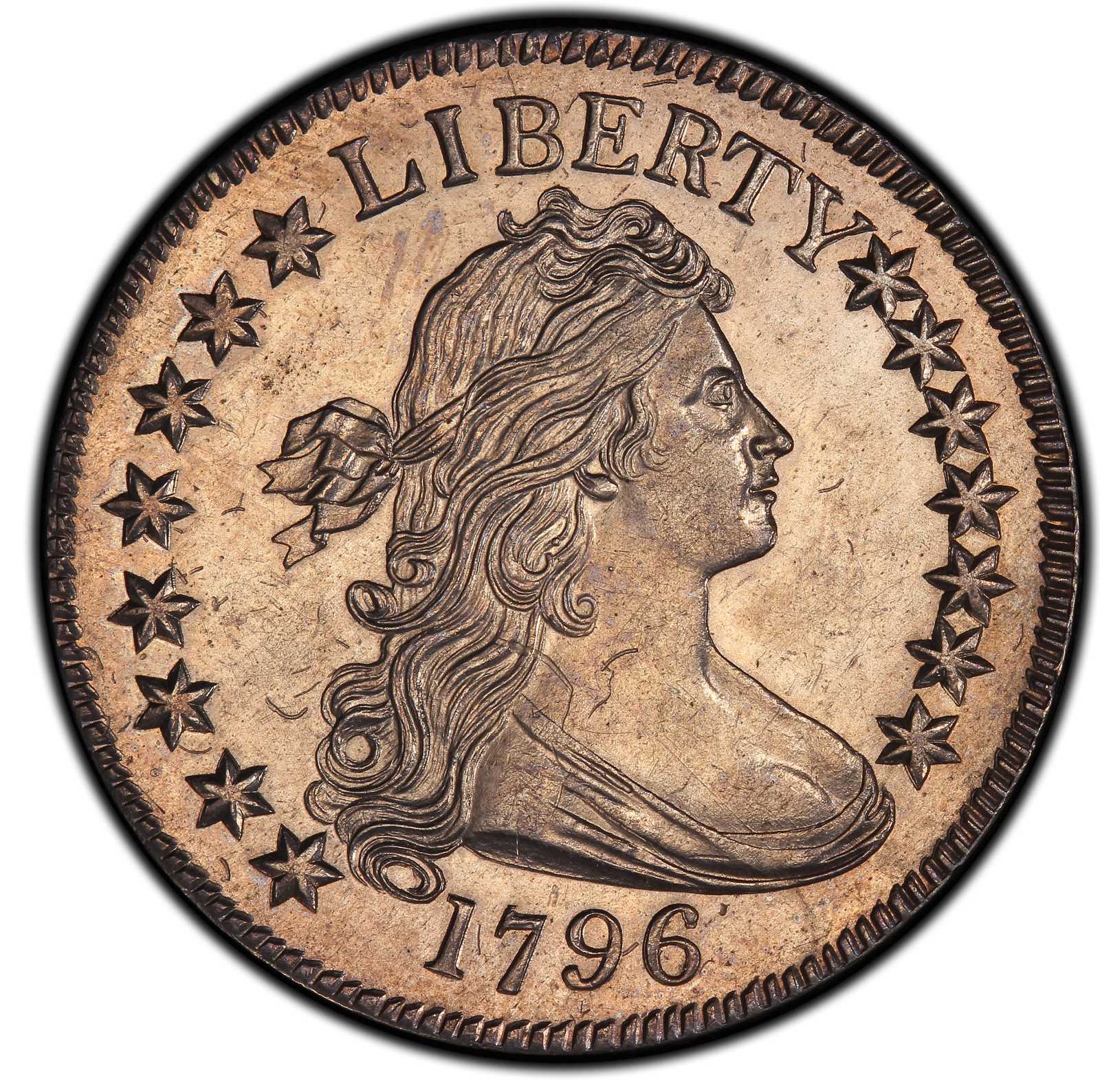
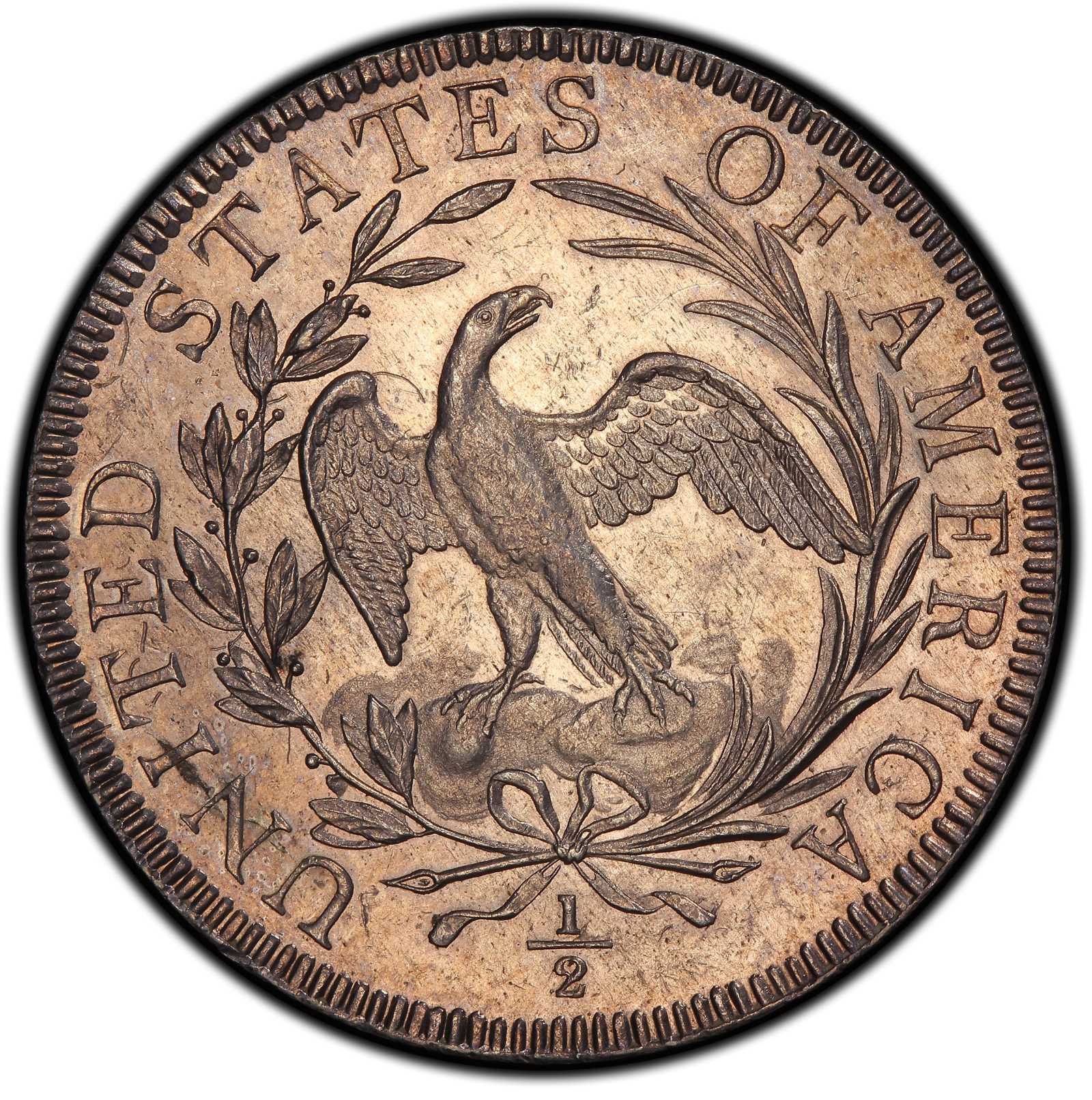
The Draped Bust design, first used on the 1795 silver dollar, reached the half dollar in 1796. The obverse shows the Draped Bust Liberty; the reverse began with a small eagle within a wreath and later adopted a heraldic (shield-breast) eagle.
Key facts
- Designed by: Robert Scot (portrait after Gilbert Stuart)
- Issue dates: 1796–1797 (Small Eagle); 1801–1807 (Heraldic Eagle)
- Composition: 89.24% silver, 10.76% copper
- Diameter: ~32.5 mm
- Weight: 13.48 grams
- Edge: Lettered (FIFTY CENTS OR HALF A DOLLAR)
The series has two reverse types. The Small Eagle type was struck only in 1796 and 1797, to the tune of just 3,918 pieces across both years — after a four-year suspension, production resumed in 1801 with the Heraldic Eagle reverse (1801–1807, no 1804). The 1796–97 Small Eagle half is famously the single toughest non-gold coin in a U.S. type set; with perhaps 200–300 known, even well-worn examples bring five figures.
The Heraldic Eagle type is far more available (about 1.6 million struck), though 1801 and 1802 are a bit scarcer, and the 1806 Knob 6, Stem Not Through Claw variety is a rare, in-demand die variety.
We actively buy Draped Bust half dollars in every grade, from the key 1796–97 Small Eagle to Heraldic Eagle type coins and rare die varieties. Send photos for a free, no-obligation offer.