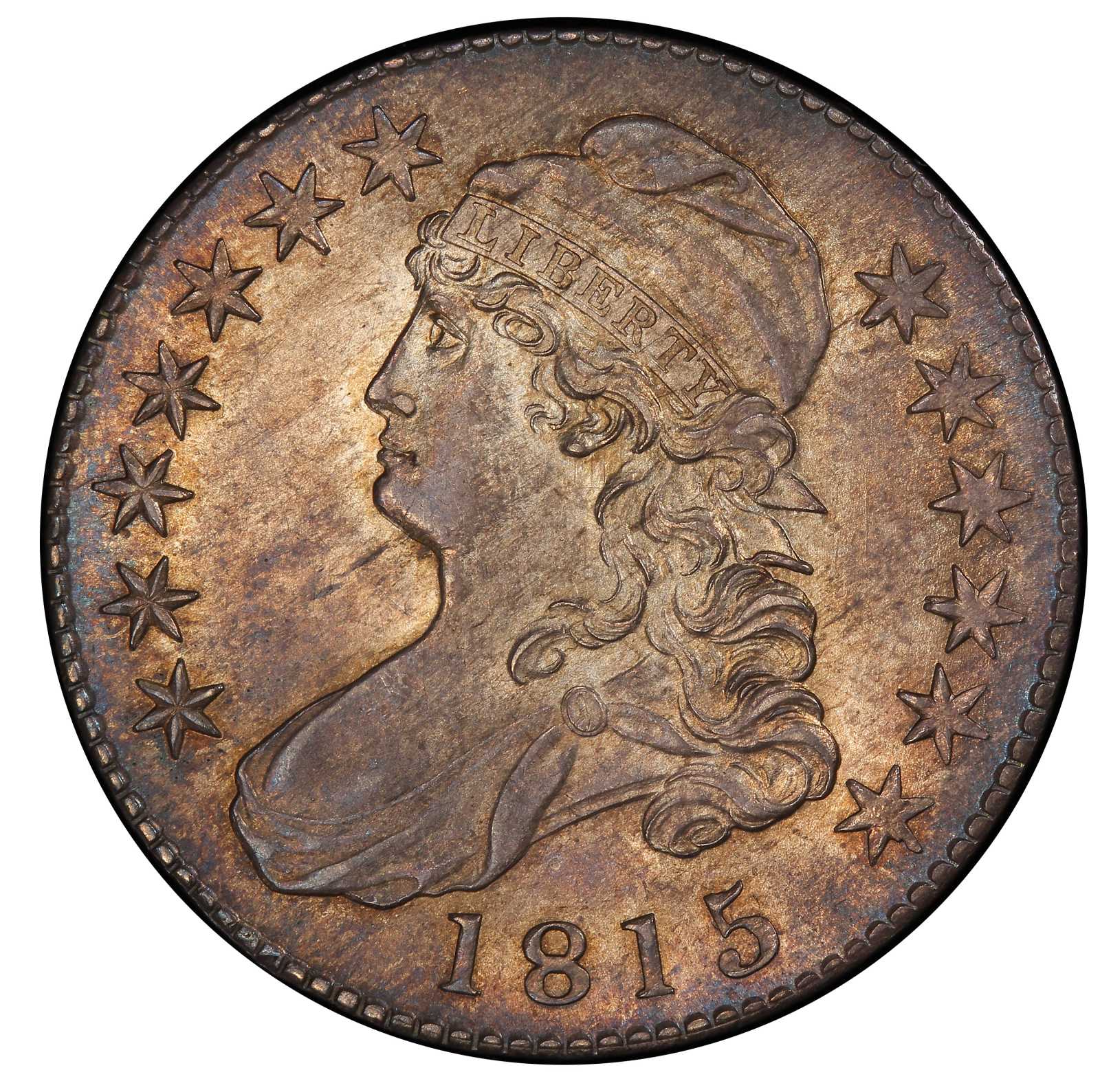
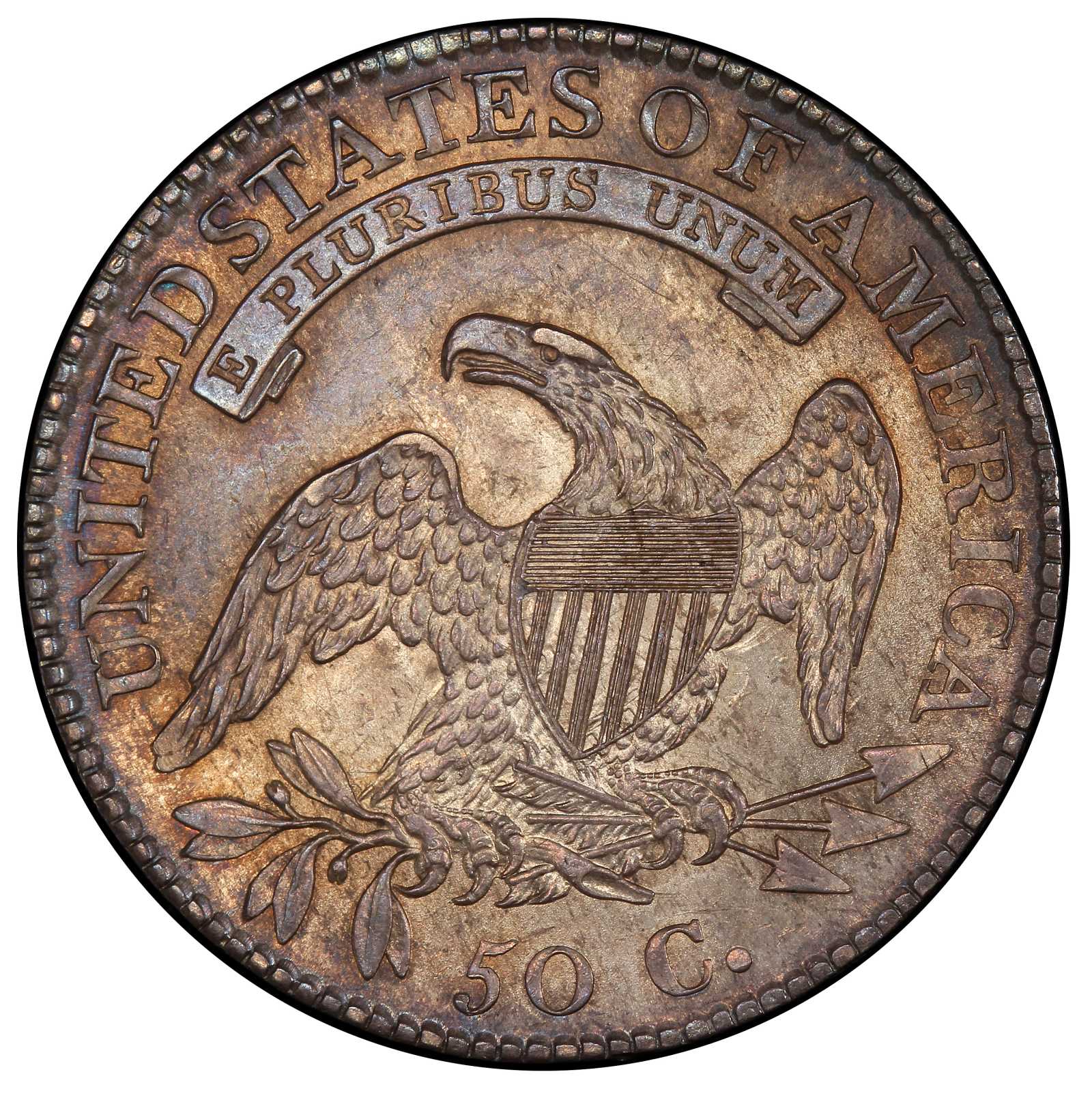
John Reich’s Capped Bust design reached the half dollar in 1807, replacing the Draped Bust motif. The obverse shows Liberty in a cloth cap; the reverse depicts a heraldic eagle. After silver dollar coinage was suspended in 1804, the half dollar became the workhorse of bank reserves, so many were stored in bags and survive with little wear — Very Fine through About Uncirculated examples are plentiful today, which fuels intense die-variety collecting (the Bust Half Nut Club).
Key facts
- Designed by: John Reich
- Issue dates: 1807–1839
- Composition: 89.24% silver, 10.76% copper
- Diameter: 32.5 mm (lettered edge); 30 mm (reeded edge)
- Weight: ~13.48 grams
- Edge: Lettered (1807–1836) / Reeded (1836–1839)
The series has three types: the Lettered Edge type (1807–1836), and — after steam presses arrived in 1836 — the Reeded Edge “50 CENTS” type (1836–1837) and the Reeded Edge “HALF DOL.” type (1838–1839). Popular key dates and varieties include the 1815/2 overdate, the rare 1817/4 overdate, and above all the 1838-O, of which only about 20 were struck — one of the major rarities of U.S. silver coinage.
(The reeded-edge issues are also covered by our Reeded Edge Capped Bust Half Dollars guide.)
We actively buy Capped Bust half dollars in every grade, from well-worn type coins to key dates, scarce die varieties, and the 1838-O. Send photos for a free, no-obligation offer.