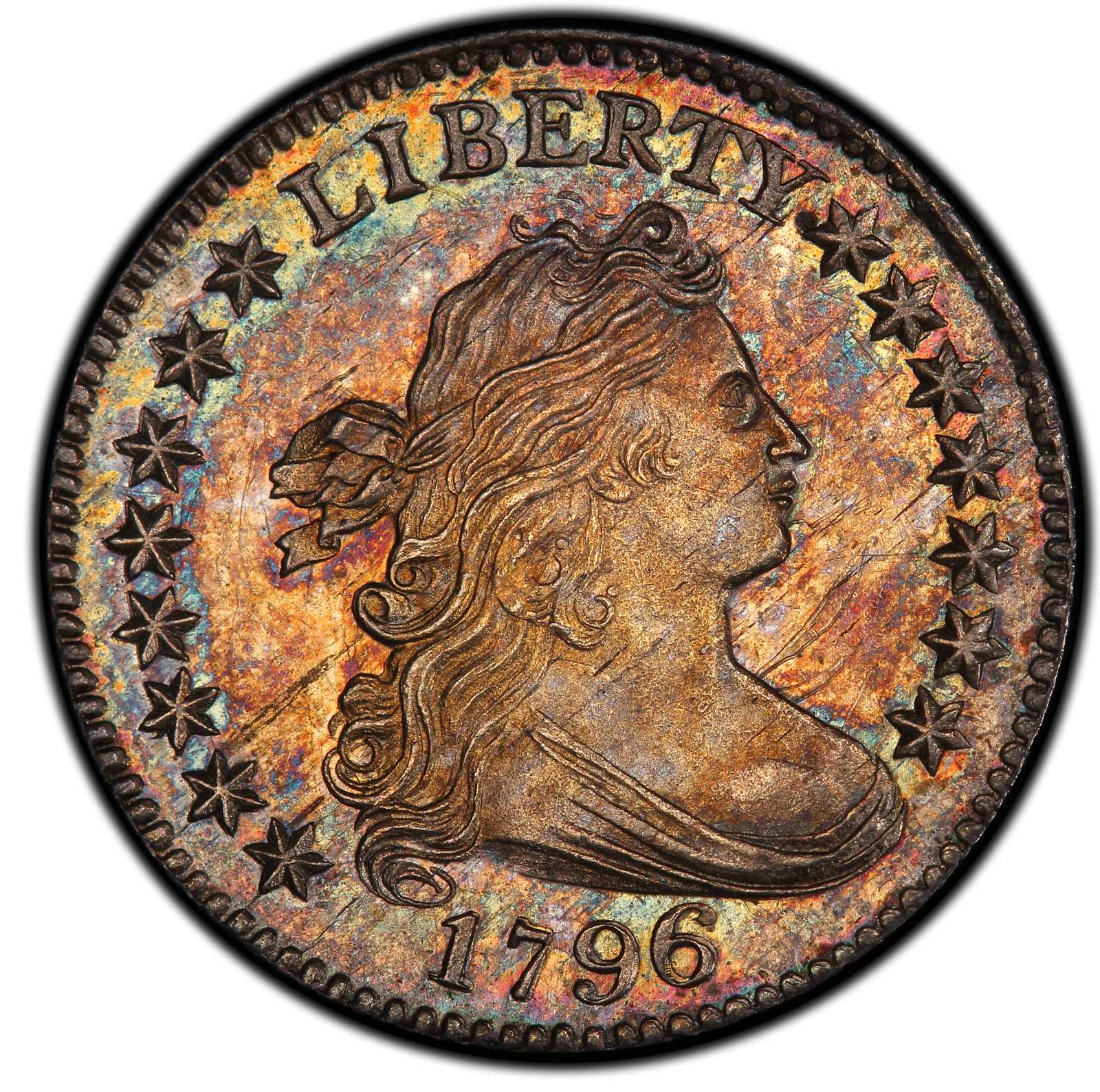
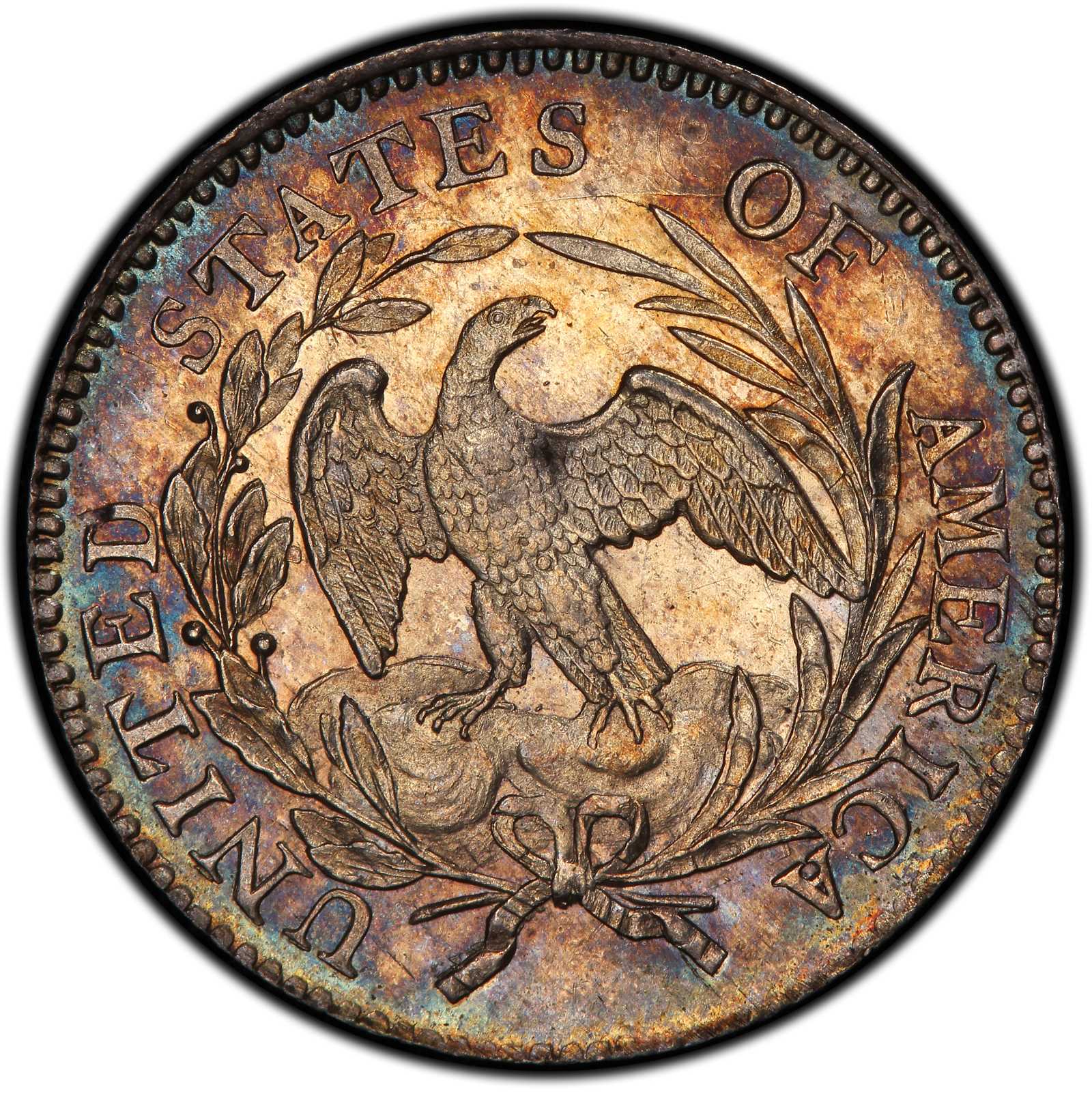
The Draped Bust dime was the first United States ten-cent piece, introduced in 1796. The nation’s earliest silver coins — half dimes, half dollars, and dollars — appeared in 1794–95, but the dime and quarter waited until 1796, by which time Robert Scot’s Draped Bust portrait of Liberty had replaced his earlier Flowing Hair design.
Key facts
- Designed by: Robert Scot
- Issue dates: 1796–1807
- Composition: 89.24% silver, 10.76% copper
- Diameter: ~19 mm
- Weight: 2.70 grams
- Edge: Reeded
The series has two reverse types. The Small Eagle type of 1796–1797 shows a small perched eagle within a wreath; in 1798 a Heraldic Eagle (shield-breast) reverse took over and ran through 1807. Both types are needed for a type set.
Early dimes circulated heavily — a dime then had the buying power of roughly two dollars today — so most survivors are well worn, though enough higher-grade coins exist for a determined collector to find a piece from Very Fine to Mint State. No date is truly common, but there are no great rarities either, with one notable exception: the 1804, with a tiny mintage of 8,265, is quite scarce and almost unobtainable in Mint State.
We actively buy Draped Bust dimes in every grade, from well-worn type coins to scarce dates and high-grade examples. Send photos for a free, no-obligation offer.